For many years, destination success was often measured by the strength of the peak: more visitors in summer, higher occupancy, busier attractions, fuller streets, fuller restaurants and fuller itineraries. That model has delivered enormous value for many destinations and tourism businesses. It has supported jobs, investment, connectivity, cultural institutions and local enterprise. But in many places, it has also reached its limits.
We can see it in the pressure on famous city centres, stretched visitor attractions, crowded transport systems, guide availability, community tolerance and the quality of the guest experience itself. Some places are full at precisely the same time that others, sometimes only a short distance away, remain overlooked. Increasingly, tourism does not always have a demand problem.
It has a distribution problem.
Too many visitors are concentrated in the same places, at the same times, around too narrow a definition of what the destination experience can be. That is why the growing industry focus on shoulder and off-peak travel matters.
ETOA’s development of SHOP, the Shoulder and Off-Peak Marketplace, is a timely and welcome intervention. SHOP is a new B2B event focused on driving demand beyond the high season, connecting destinations, suppliers and tour operators who want to grow business outside traditional peak months and contribute to a more balanced visitor economy. ETOA’s own positioning recognises the dual challenge many destinations now face: overcrowding in peak periods or in specific areas, alongside underused capacity elsewhere and at other times of year.
That matters because this challenge cannot be solved by destination marketing slogans alone. It needs product, distribution, buyer confidence, operational reliability and, above all, a better story.
One of the problems with the phrase “off-season” is that it defines a place almost entirely through the eyes of the visitor economy. For local people, these months are not “off”. They are part of the ordinary rhythm of the year.
Autumn is not off-season to the wine producer, the grower, the chef, the walker, the photographer or the town preparing for a harvest festival. Winter is not off-season to the city switching on its Christmas lights, the theatre opening a new season, the museum building an exhibition programme, the retailer preparing for winter sales, or the community gathering for carnival, music, food, faith or civic celebration.
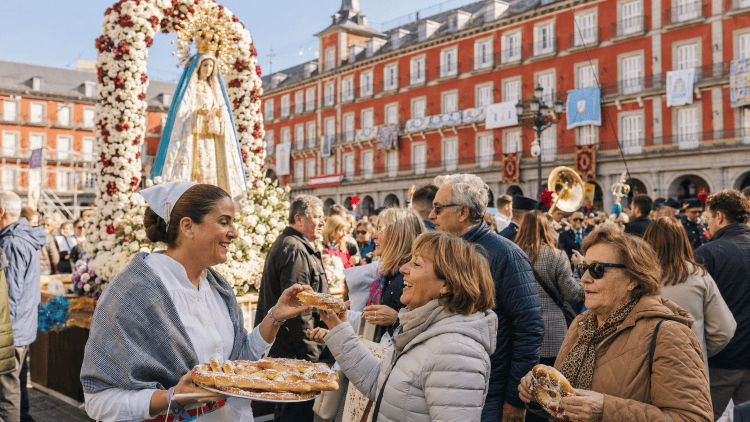
Across Europe, and far beyond, there are countless moments outside the conventional peak that already have deep local meaning. Harvest festivals, wine festivals, Oktoberfests, Fasching, winter markets, Christmas lights, autumn colours, Halloween celebrations, local food events, cultural seasons, carnivals and town festivals are not artificial tourism products. They are part of the living calendar of a place.
Blackpool Illuminations is a famous British example. It does not simply extend the season by accident. It gives people a specific reason to visit later in the year. Menton’s Fête du Citron, Ljubljana’s Dragon Carnival and many other local festivals do the same in their own way. They create a moment, a story and a reason to travel.
This is an important distinction. The opportunity is not simply to persuade people to visit when it is quiet. The opportunity is to reveal what is already valuable, distinctive and alive at different times of the year.
Too much off-season messaging still relies on absence: fewer crowds, lower prices, better availability and easier access. Those are useful benefits, and they certainly matter, but they are not enough.
A trip outside high season should not feel like a discounted version of summer. It should feel like a different experience in its own right: more personal, more atmospheric, more local, more seasonal and more connected to the real life of the destination.
This is where the industry has work to do. We need to move from “come because it is less busy” to “come because this is the best time to experience this particular side of the place”.
That might mean food and wine in autumn, light festivals in winter, cultural programming in early spring, neighbourhood life outside the main tourist districts, smaller group access to places that are difficult to enjoy in peak season, museums and galleries when visitors have more space and more time, walking routes when the landscape is at its best, coastal towns when the pace changes, or cities when residents have reclaimed their own streets.
Shoulder and off-peak travel needs its own proposition, not just a price point.
The phrase “season extension” is useful, but it can be slightly misleading. It implies stretching peak season at both ends, as if the aim is to make March or November behave a little more like July. That is not really the point.
The more interesting task is to understand what each season is genuinely good at. That requires what I would call season intelligence.
Season intelligence means looking at a destination through the full calendar of local life, not only through traditional visitor peaks. It asks what happens when the summer visitor is not looking. It asks what a place does well in autumn, winter or early spring. It asks which local events, traditions, landscapes, foods, cultural programmes or community rhythms could become stronger visitor reasons. It also asks what would make an operator confident enough to include this product in an itinerary, and what needs to be interpreted, packaged or connected to make it commercially viable.
That is a very different conversation from simply saying “we have capacity in February”.
Capacity is not enough. Visitors and operators need a reason.
A destination cannot simply declare itself attractive beyond high season. It has to make the experience easy to understand, easy to buy and easy to deliver. That is where product design becomes central.
Destinations, attractions, venues, accommodation providers, DMCs, operators, guides, transport partners and technology providers all have a role to play. ETOA’s SHOP format is built around that practical industry need, combining pre-scheduled B2B meetings with insight sessions and resources designed to support more balanced tourism growth.
The question is not only “what can we promote?” It is whether the experience can be booked, explained clearly and delivered reliably. It is whether it works for individuals, groups or both. It is whether there is enough interpretation for visitors to understand what they are seeing. It is whether an operator in another market can sell it with confidence. It is whether it creates value for the local community as well as the visitor.
This is where many good ideas fail. They may be attractive locally, but not yet shaped for the travel trade. Or they are marketable in theory, but unreliable in operation. Or they are interesting, but not easy to explain.
The best shoulder and off-peak products will sit at the meeting point of local authenticity and commercial readiness.
There is another practical issue here, particularly for operators already selling year-round product. Many itineraries are available across multiple seasons, but the way they are presented often remains surprisingly static. The same highlights, the same images, the same descriptions and the same promise may be used whether the customer is travelling in June, October, December or March.
That creates a problem. If the product is described mainly through its high-season appeal, then the shoulder or off-peak version can easily feel like the same trip at a less attractive time. At that point, the most obvious commercial lever becomes price.
But that is a missed opportunity.
The itinerary may not need to change completely. The way it is framed may need to change. Autumn might bring food, wine, harvests, colour, walking and a different quality of light. Winter might bring Christmas lights, museums, theatre, shopping, interiors, food, firesides and slower exploration. Early spring might bring gardens, local festivals, landscapes, markets and a sense of renewal. The same destination can offer a different proposition at different times of year.
For operators, this raises an important question: should year-round itineraries be written, merchandised and presented more dynamically, so that seasonal strengths are visible to the customer at the point of decision?
That does not mean abandoning curation or handing brand voice to technology. Quite the opposite. The strongest approach will still depend on product knowledge, editorial judgement and a clear understanding of the operator’s customer. AI and modern website technology can, however, help experienced teams manage this complexity more effectively. They can support content planning, seasonal tagging, itinerary variants, image selection, translation, testing and deployment. Used carefully, they can help operators reflect the real seasonal character of a destination while retaining human curation, accuracy and brand control.
In a market where many products operate year-round, static copy may increasingly become a commercial weakness. Shoulder and off-peak travel needs more than lower prices. It needs seasonal relevance.
The same thinking applies to visitor dispersal. For years, destinations have talked about moving visitors away from hotspots. But visitors do not disperse simply because we ask them to. They move when there is a compelling reason to move, and when the experience feels clear, safe, meaningful and worth their time.
Dispersal is not just crowd management. It is experience design.
If we want visitors to move across a wider geography, we have to make more of the destination explorable. That means routes, stories, interpretation, access, confidence and convenience. If we want visitors to travel at different times of year, we have to make those times feel special. That means seasonal narratives, local calendars, cultural anchors and reasons to choose one month over another.
If we want visitors to engage more deeply, we have to help them understand what is in front of them. That means guiding, interpretation, multilingual access and content that gives context, not just information.
This is where technology has an important role, though not as the whole answer. Self-guided content can help visitors explore beyond the obvious centre. Multilingual interpretation can make cultural experiences accessible to more people. Digital routes can connect attractions, neighbourhoods, food, retail, stories and local events. Hybrid guided and self-guided models can help businesses maintain quality when guide availability or staffing levels vary across the year.
Technology does not create the experience by itself. Used well, it can reduce friction, widen access and help reveal what is already there.
If we want visitors to spread out, we have to spread the experience.
The point of this is not to flatten the year completely. Some destinations will always have a high season, and that is not necessarily a problem. Peak demand supports many businesses and communities. The issue is over-reliance.
A more balanced visitor economy is not only better for sustainability and resident sentiment. It is better for business resilience. For destinations, it means better use of infrastructure and a stronger year-round case for investment. For attractions and venues, it means smoother demand, improved utilisation and opportunities to create more distinctive programming. For operators and DMCs, it means fresh product, stronger availability, better guest experience and less exposure to overcrowded itineraries.
For visitors, it means a chance to experience places with more space, more context and often more authenticity. For local communities, it means tourism that better aligns with the annual rhythm of the place.
That is why the conversation around SHOP feels timely. ETOA is helping to place shoulder and off-peak travel where it belongs: not just in policy, sustainability or marketing, but in product, partnerships, distribution and delivery. Its insight programme covers source-market seasonality, off-peak opportunity in European destinations, marketing strategies beyond peak season, data and sentiment analysis, and technology’s role in off-season travel and visitor dispersal.
The future of tourism growth cannot simply be about persuading more people to visit the same places at the same time. The stronger opportunity lies in helping visitors choose different times, different places and different versions of the experience.
That requires a shift in mindset: from low season as a gap to be filled, to shoulder and off-peak as a value proposition to be designed; from season extension to season intelligence.
The real annual life of a destination is already there. The task now is to identify it, shape it, interpret it and make it bookable.
That is where the next opportunity lies.
To accompany this article, I’ve prepared a practical Beyond High Season Playbook for destinations, attractions, operators and experience providers.
It looks at how to identify seasonal value, shape it into bookable product, strengthen messaging, review itinerary content and build more resilient year-round visitor demand.