It is one of those words that now carries more heat than precision.
To some residents, it means crowded streets, rising rents, disappearing local shops, noisy nightlife and a sense that their own city no longer belongs to them. To parts of the travel industry, it can sound like an accusation that tourism itself is the problem. To politicians, it is often shorthand for a highly visible public complaint that demands action.
But perhaps the more useful way to look at overtourism is not simply as “too much tourism”, but as unmanaged tourism, or at least badly managed tourism. I am certainly not the first to make that point, but it feels increasingly relevant as cities try to move from promotion to stewardship.
That does not mean numbers are irrelevant. In certain streets, markets, monuments and neighbourhoods, the sheer pressure of visitor numbers is plainly part of the problem. But the deeper issue is rarely just the total number of visitors. It is where they go, when they go, how long they stay, how they behave, what they spend money on, what local value is created, and whether the destination has the tools, authority and confidence to manage the system it has helped to build.
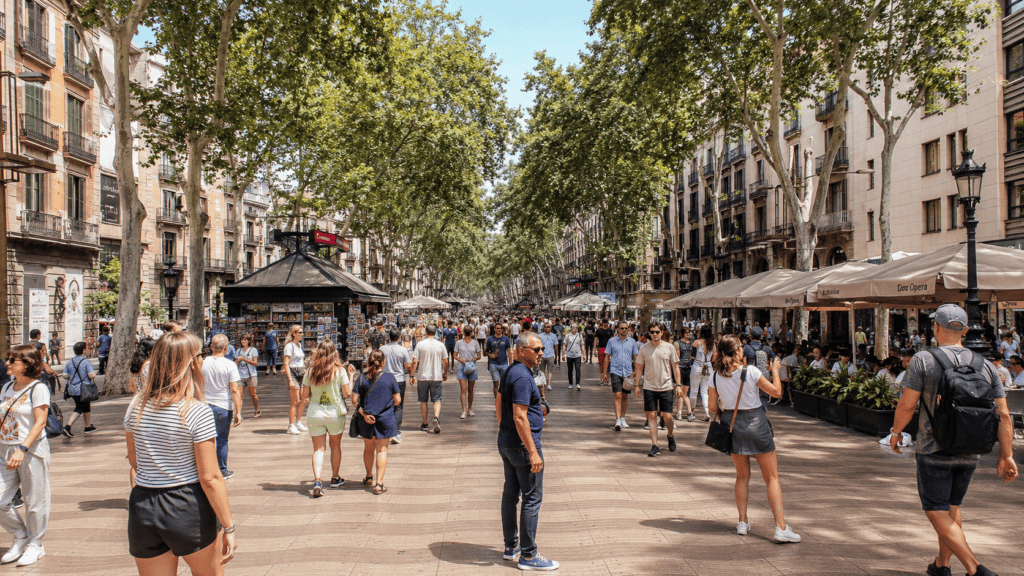
A recent Guardian article on Barcelona brought this into sharp focus. José Antonio Donaire, the city’s first commissioner for sustainable tourism, is not presented as anti-tourist. His argument is more subtle, and more important. Barcelona, he says, has reached the maximum number of tourists it can accommodate. The objective is not simply to attract more people, but to manage the visitors the city already has.
That is a major change in posture.
During much of my career, the general industry thinking was that destination success equated to volume. More arrivals, more bed nights, more flights, more cruise calls, more spend, more profile. Promotion was the engine, and the more people came, the more successful the destination appeared to be.
Now some cities are discovering that promotion without management carries a cost.
Barcelona is assembling a wide set of controls, including action on tourist apartments, cruise berths, coach access, anti-social behaviour, La Boquería market and the reinvestment of tourist taxes into local commerce and city-centre improvement.
Venice has taken a different but equally visible route, experimenting with access fees for some day visitors to the historic city. New York offers another cautionary example, particularly around accommodation controls. The question there is whether restricting short-term rentals actually returns enough homes to the long-term residential market, or whether it removes one source of pressure while leaving deeper housing issues unresolved.
This is where the story becomes more complicated.
Restricting visitor accommodation may reduce one form of pressure, but it does not automatically solve housing affordability, visitor concentration, resident alienation or public-space congestion.
So the question is not whether cities should regulate. In some cases, they clearly must.
The question is whether regulation alone is enough.
I do not think it is.
The danger of the prohibition approach is that it can become a visible substitute for a deeper destination strategy.
Fees, caps, bans and limits are politically understandable. They show action. They may also be necessary where the damage is obvious. But unless they are part of a broader management model, they risk becoming blunt instruments.
A city can charge more. It can reduce access. It can limit accommodation. It can move coaches away from the centre. It can ban certain kinds of behaviour. All of those things may help.
But they do not, on their own, answer the more important question:
What kind of tourism does the city actually want, and how is the whole visitor economy being aligned behind that objective?
This is where the tension becomes difficult.
While Barcelona’s city authorities are trying to limit growth and better manage what they have, much of the wider tourism system is still built to increase numbers. Airports want more passengers. Airlines want fuller aircraft. Hotels want occupancy. Cruise lines want profitable itineraries. Tour operators want product availability. Attractions want ticket sales. Sightseeing companies want volume. Online platforms want transactions.
None of this is surprising. These businesses are doing what they are designed to do.
But destinations cannot manage tourism effectively if the surrounding commercial system is still rewarded almost entirely for adding volume.
That is perhaps the missing part of the overtourism debate. We talk about residents versus tourists, or cities versus visitors, when the real challenge is one of incentives. The city may want balance, but many of the commercial actors around the city are still measured by growth.
There must be a route to mutual cooperation, but it requires a different kind of conversation.
Not “how do we stop tourism?”
Not “how do we keep growing at all costs?”
But “how do we create a visitor economy that remains commercially successful without exhausting the place it depends on?”
That means moving from destination promotion to destination stewardship.
There is another practical difficulty.
“The tourism industry” is not one organised body that a city can simply sit down with and persuade. It is fragmented across airlines, airports, hotel groups, cruise lines, OTAs, DMCs, attractions, coach operators, guides, sightseeing companies, platforms, wholesalers and thousands of smaller businesses spread across many countries.
Barcelona may be able to engage directly with major European airlines, larger hotel groups, cruise operators or leading OTA partners. But what about a tour operator in Beijing, Moscow, São Paulo or Delhi selling Barcelona as part of a wider European itinerary? What about a coach operator serving a wholesaler three steps removed from the destination? What about a platform whose commercial model is driven by transactions rather than place management?
This is one of the most difficult parts of the whole debate.
Destinations can set rules locally, but tourism demand is often generated globally. The city may carry the consequences, while many of the commercial decisions shaping visitor flows are made elsewhere.
That does not mean cooperation is impossible. But it does mean destinations need to think much harder about how they create incentives for cooperation.
If destinations want the industry to behave differently, they may need to combine the stick with a much clearer carrot.
Operators, platforms and intermediaries that cooperate with a city’s management objectives could perhaps be recognised as preferred or accredited partners. That status could come with practical advantages: better access to certain booking channels, improved coach drop-off arrangements, approved itineraries, priority information, off-peak opportunities, destination marketing support, data-sharing partnerships, or closer working relationships with key attractions and cultural institutions.
But this would need to be handled carefully.
An accreditation system must not become a cumbersome behemoth, or a process designed around the needs and resources of the biggest players. If it is too slow, too bureaucratic or too expensive, it will fail. Worse, it may simply give more influence to those with the deepest pockets and the largest compliance teams.
For this to work, the process would need to be practical, simple and open. Consultation would need to include major operators and platforms, but also smaller tour companies, DMCs, guides, coach operators, attractions, local businesses and international partners who may sit several steps away from the destination itself.
Accreditation should not be about creating another badge for marketing purposes. It should be about setting clear, workable standards: respecting access rules, using approved drop-off points, supporting off-peak or alternative itineraries where appropriate, sharing useful data, communicating visitor behaviour expectations and helping the city reduce pressure on the most vulnerable hotspots.
In other words, cooperation should not only be a moral request. It has to become commercially useful, operationally realistic and accessible to the wider industry.
A city cannot force every overseas operator to care about local resident sentiment. But it can start to shape the market by rewarding those who help manage demand responsibly. Over time, accreditation, access and partnership could become part of the destination’s commercial architecture.
Operators who work with the city gain legitimacy and practical benefit.
Those who ignore the rules may find access more limited, less convenient or less attractive.
The future may not simply be about restricting bad behaviour. It may also be about rewarding better behaviour, provided the system is fair, simple and genuinely usable by the whole industry, not just by those large enough to navigate it.
There is also the independent traveller to consider.
Not every visitor arrives through a tour operator, cruise line, DMC or organised group. Many people now build their own trip from fragments: a flight, a hotel, a few online recommendations, social media inspiration, Google Maps, review sites and spontaneous decisions once they arrive.
That part of the market is harder to influence through industry partnership alone. Here, the responsibility sits more squarely with the destination itself: clear visitor information, better digital guidance, local byelaws where necessary, visible rules, good signage, transport nudges, timed access, responsible messaging and consumer-facing campaigns that explain how to enjoy the city without adding to the pressure.
Technology can also play a practical role. Digital guides, city passes and destination tools, including POPGuide and digital Destination Pass solutions such as the YesMilano City Pass, can help independent travellers discover alternative routes, follow suggested itineraries, receive timely information and move around a city with more confidence. Used well, these tools can influence behaviour gently, supporting better visitor flows without making the experience feel controlled.
Independent travellers should not be treated as the problem. But they are part of the visitor-flow reality. If cities want to manage tourism properly, they need to influence not only the organised trade, but also the millions of individual decisions made by visitors once they are on the ground.
A practical management model would need several elements.
First, cities need better shared intelligence. Airports, hotels, attractions, ticketing systems, city passes, mobility providers and tour operators all hold pieces of the visitor-flow puzzle. Used responsibly, that data can help destinations understand pressure points, peak periods, visitor movement, repeat behaviour and unused capacity.
It can also show where demand might be shifted rather than simply suppressed.
This matters because tourism pressure is often highly concentrated. A city may feel overwhelmed in a handful of streets, squares, markets or monuments while other areas remain lightly visited. There may be capacity elsewhere, but only if those places are ready to receive visitors and if the visitor proposition is strong enough to draw them.
Dispersal is not simply a matter of pushing people away from busy places. Done badly, it risks exporting pressure into neighbourhoods that neither want nor can handle it.
Done well, it means creating better reasons to visit different places, at different times, in ways that generate local value.
It is too easy to say that tourists all want to visit the same places.
Of course, first-time visitors will want the icons. That is normal, and it is part of the reason people travel. But demand is not fixed. It is shaped by storytelling, packaging, distribution and confidence.
Repeat visitors, culturally curious visitors and longer-stay visitors can be encouraged into different rhythms: neighbourhoods that are ready to receive them, lesser-known museums, parks, food culture, architecture beyond the obvious icons, day trips into the wider region, wine tourism, local festivals and shoulder-season experiences.
That is where the travel industry can be part of the solution, not simply part of the problem.
Tour operators, OTAs, guides, attractions, DMCs and destination marketers all influence what visitors believe is worth doing. If every itinerary repeats the same few icons, congestion is inevitable. If the product story becomes richer, demand can become more balanced.
We also need to take seasonality much more seriously.
ETOA’s SHOP initiative feels highly relevant here because it is not arguing for indiscriminate growth. It is focused on driving demand beyond the high season and bringing destinations, suppliers and operators together around a more balanced visitor economy.
Shoulder and off-peak travel will not solve every pressure point. It will not fix housing policy. It will not remove all resident frustration in heavily visited neighbourhoods.
But it is one of the practical levers available.
If tourism demand can be spread more evenly through the year, the same destination can often create more value with less peak-period stress. That is good for residents, better for infrastructure and often more commercially sensible for businesses that struggle with sharp seasonal peaks and troughs.
The industry has spent decades learning how to stimulate demand.
Now it needs to become better at shaping demand.
Any destination strategy will fail if residents see only the costs.
Tourist taxes are now part of the policy mix in many cities, but residents need to see where the money goes. If the proceeds are used to improve public toilets, street cleaning, local markets, cultural facilities, transport, local commerce and neighbourhood services, the argument becomes easier to sustain.
If the money disappears into general budgets, resentment will remain.
This is one of the reasons Barcelona’s focus on La Boquería is so symbolically important. A market that once served local people but becomes dominated by takeaway snacks and passing visitors tells a bigger story. It is not just about tourism numbers. It is about whether residents still feel that the city centre has a purpose for them.
The displacement of local life by visitor consumption is not inevitable.
It is a policy choice, including when it happens through inaction.
Visitor behaviour also needs to be addressed more openly.
Cities are entitled to say what they will and will not accept. Organised pub crawls, antisocial behaviour, illegal rentals, unmanaged coaches and overcrowded public spaces are not inevitable side effects of tourism. They are signs of a system that has been allowed to drift.
The answer is not to make visitors feel unwelcome. Most visitors do not want to damage the places they visit. Many simply respond to the signals, products, prices and behaviours placed in front of them.
That means better communication matters. So does enforcement. So does product design. So does the example set by operators and platforms.
A visitor economy that sells a city as a playground should not be surprised when some visitors behave as if it is one.
There is also a skills question here, which may deserve more attention.
Destination management today is far more complex than old-style tourism promotion. It requires people who understand public policy, housing, mobility, data, visitor behaviour, resident sentiment, regulation, sustainability, commercial partnerships and product development.
Are enough young people coming through education and into the tourism workplace with those skills? Are public-sector tourism teams properly resourced? Are destination organisations equipped to manage the systems they once mainly promoted?
This may vary enormously from country to country, and even from city to city.
Some destinations have strong destination management organisations, good data and mature public-private collaboration. Others still operate with limited budgets, political short-termism and a promotional mindset that belongs to a different era.
That may be a separate article in itself, but it matters.
The future of tourism management will not be delivered by slogans. It will need professional capability, political courage and better cooperation between the public and private sectors.
The answer to overtourism cannot simply be prohibition. Nor can it be denial from the tourism industry.
Some limits will be necessary. Some taxes may be justified. Some accommodation controls may be unavoidable. Some visitor behaviour should be actively discouraged.
But the bigger opportunity is to build a more intentional visitor economy: better distributed, better timed, better explained, better measured and better aligned with local life.
These should not be treated as mutually exclusive objectives.
The most successful destinations of the future will not be those that simply attract the most people. They will be the places that understand what kind of tourism they want, manage it with confidence, and build enough trust between residents, government and industry to make it work.
Perhaps, then, the real challenge is not overtourism.
Since publishing this piece, the discussion on my LinkedIn channel has added some useful further perspectives.
One point that stood out is accountability. Promotion usually has a clear owner and clear metrics. Management is much messier. It cuts across transport, housing, public space, policing, attractions, operators, platforms and resident expectations. Perhaps visitor flow needs to be treated less as a marketing output and more as shared urban infrastructure.
Another useful theme was the need to move beyond volume metrics. Arrivals, bed nights and visitor spend still matter, but they do not tell us whether the destination, the visitor and the resident experience are properly aligned. The phrase “smarter demand shaping” feels particularly apt: not simply more demand, but better distributed, better timed and better matched to the destination’s real capacity.
The discussion also reinforced that dispersal is not as simple as telling visitors to go somewhere else. Alternative places and regions need visibility, connectivity, information, product strength and practical reasons to visit. If the alternative feels difficult, unclear or second best, many visitors will stay with the familiar hotspots.
Finally, several comments underlined the difficulty of aligning private commercial interests with the long-term interests of the destination. That is perhaps the hardest part of all. Managed tourism cannot rely only on goodwill. It needs clear rules, practical incentives and enough shared benefit for the main players to engage.
None of this is easy or instant. But it reinforces the central argument: the overtourism answer is not simply to promote less or restrict more. It is to manage tourism more seriously, with better governance, better tools and a clearer understanding of who is accountable for the visitor economy.
Sources and notes
The Guardian, Man tasked with taking Barcelona back from overtourism, Stephen Burgen, 18 May 2026.
Barcelona tourism management measures referenced from the Guardian article, including tourist apartment licences, cruise berth reduction, coach access, La Boquería and tourist tax reinvestment.
Venice access fee information based on the official Venezia Unica visitor access fee guidance for 2026.
New York short-term rental reference based on Local Law 18 and public discussion around the impact of short-term rental restrictions on housing supply.
ETOA SHOP initiative referenced as an industry example of shoulder and off-peak season demand development.
Further examples and commentary based on publicly available destination policy discussions and industry analysis reviewed in May 2026.