
Global investment in Travel & Tourism has passed US$1 trillion. That is a remarkable vote of confidence in the sector. But as more capital flows into tourism businesses, the real test will be whether investors and leadership teams understand, and protect, the less tangible qualities that made those businesses valuable in the first place.
There is something both encouraging and thought-provoking about the scale of investment now flowing into global tourism.
For many years, those of us who have worked in the sector have argued that tourism should be understood not simply as an industry of holidays, hotels and transport, but as a major component of economic development. It supports employment, infrastructure, culture, regional regeneration and international trade and, in many destinations, entire local economies. Here in the UK, inbound tourism is our fifth-largest export earner and second-largest service export industry, a useful reminder that every overseas visitor spending money on accommodation, attractions, restaurants or transport is effectively buying a British export.
That broader economic importance is now attracting increasingly serious financial backing.
According to the World Travel & Tourism Council, global tourism investment exceeded US$1 trillion in 2025, rising by 8.5 per cent in a single year. The Travel & Tourism sector itself contributed a record US$11.6 trillion to world GDP. These are extraordinary figures and, broadly, they should be welcomed. Tourism remains one of the world’s great growth industries, and the confidence being shown by governments, institutional investors and private capital is a recognition of its long-term economic importance.
But the numbers also prompt a rather more difficult question.
Are we investing in tourism, or are we investing mainly in tourism assets?
The distinction matters because the most valuable elements of many travel and tourism businesses do not necessarily sit comfortably on a balance sheet.
Across the sector, capital is flowing into airlines, hotels, attractions, cruise businesses, tour operators, tourism technology and destination infrastructure. At corporate level, too, we are seeing considerable investor appetite for established travel businesses.
The most recent and visible example is easyJet, where Apollo has agreed a £5.7 billion acquisition following a competitive bidding process involving Castlelake. The easyJet board has backed the transaction, as has founder Sir Stelios Haji-Ioannou, while Apollo has said it intends to accelerate the airline’s commercial ambitions, including the continued development of its fast-growing holidays business.
Nor is this confined to airlines or to one investor. Blackstone acquired Village Hotels in 2024, adding a substantial UK hospitality business to a portfolio that already included Bourne Leisure. At the time, Blackstone explicitly pointed to the growth potential of lodging and leisure and its intention to support the existing management team through the next stage of the business.
In river cruising, L Catterton acquired a significant stake in AmaWaterways from a Certares-led investor consortium. Importantly, founders Rudi Schreiner, Kristin Karst and the Murphy family retained meaningful ownership, providing continuity alongside the new investment.
The broader pattern is clear. Established travel brands, hotel groups, airlines, tour operators, cruise businesses and tourism infrastructure continue to attract serious pools of capital.
There is no reason to regard any of this negatively. New ownership can bring investment, ambition, strategic focus, expertise and access to resources that may not previously have been available. It can create an opportunity to reconsider strategy, accelerate investment, introduce new capabilities and take businesses into areas that previous owners may have been unwilling or unable to pursue.
The more interesting question is what happens after the investment has been made.
I spent much of my career in escorted touring, including many years leading Insight Vacations, and one thing that experience taught me is that the real value of a travel business is rarely confined to the assets that can be easily counted.
A coach can be leased, hotel rooms contracted, technology licensed and routes replicated. Even itineraries, at least on paper, can be copied remarkably quickly. What is much more difficult to reproduce is the accumulated judgement, knowledge, culture, relationships and instinct that develop inside a successful travel business over many years.
Sometimes that knowledge appears in obvious ways. More often it is hidden inside hundreds of small decisions that customers may never consciously notice but which determine whether an experience feels ordinary or exceptional.
It might be a product manager who understands why a particular hotel works better at one point in an itinerary than another. It might be a Tour Director who knows when to abandon the planned programme because an unexpected opportunity has arisen. It might be a contracting manager whose long-standing local relationships suddenly become invaluable when a city is full, a hotel closes or disruption forces a last-minute change.
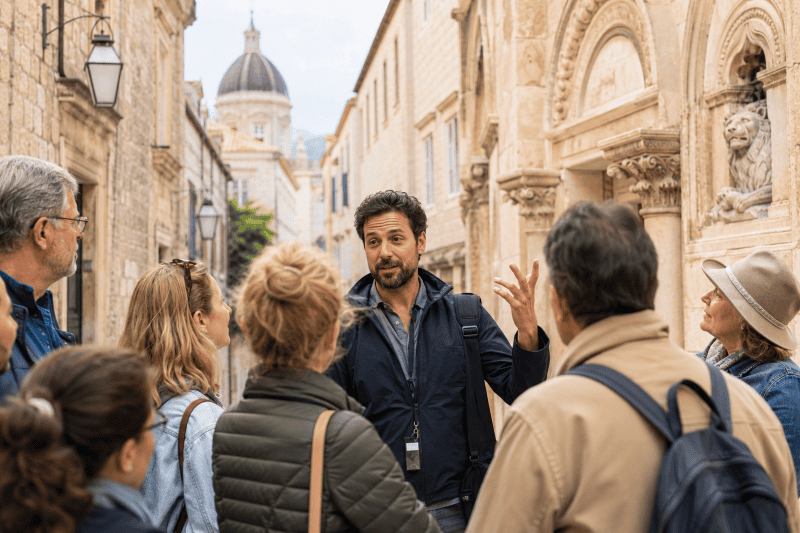
These are not particularly dramatic examples, but collectively they are often where the real intellectual capital of a tourism business resides.
And this is where the challenge becomes more subtle. Investors and management teams quite reasonably look for greater productivity, stronger margins and opportunities to simplify an organisation. The individual decisions that follow can make perfectly good commercial sense. The question is whether, taken together, they strengthen the business or gradually begin to remove some of the capability and distinctiveness that made it valuable in the first place.
There are well-known examples outside tourism of what can happen when that balance is lost. Kraft Heinz became a cautionary case following the merger backed by 3G Capital and Berkshire Hathaway. An intense focus on cost reduction was subsequently accompanied by concerns about under-investment in innovation and brand development, and the company eventually recorded substantial writedowns. The difficulties cannot be attributed to cost cutting alone, but the experience remains a useful warning that efficiencies cannot indefinitely compensate for insufficient investment in the underlying capabilities that sustain brands.
The same tension can arise in any industry.
A specialist role disappears because the work can apparently be absorbed elsewhere. Experienced people leave and processes take their place. Product decisions move further from the customer. Local relationships become centralised. Brands begin to share more systems, more suppliers and more operating practices.
None of these changes necessarily looks alarming in isolation, and some may improve the business considerably. But over time it is possible for an organisation to become more efficient while simultaneously becoming less distinctive.
That matters particularly in tourism because so much of the sector’s value is created through people and accumulated experience rather than through patents or proprietary assets.
When experienced people leave, they do not simply take a salary cost with them. They may also take relationships, judgement, institutional memory and a deep understanding of what customers value. The financial saving is visible immediately; the loss of capability may take considerably longer to reveal itself.
The same applies to brands.
Scale naturally creates opportunities for common systems, stronger purchasing power, shared technology and more efficient infrastructure. Those advantages are real and should be pursued. Indeed, failing to capture them would itself be poor management.
But the more successfully an organisation standardises the things that can be standardised, the more important it becomes to protect the things that should not be.
That is where leadership judgement becomes critical.
The easyJet transaction is interesting in precisely this context. easyJet is not simply a collection of aircraft, airport slots and routes. Over three decades it has developed one of Europe’s most recognisable travel brands, with a distinctive personality, a very clear proposition and an unusually strong visual identity.
Apollo has made clear that it sees long-term growth potential in the business, and there is every possibility that new ownership could provide the investment and strategic freedom to make easyJet an even stronger company.
The wider question, however, applies to any investor acquiring a successful tourism business: how much of the value being acquired lies in things that cannot easily be quantified, and how well do the new owners and leadership team understand what those things are?
This question becomes even more interesting as technology and AI begin to reshape the industry.

I remain very positive about the potential of AI and automation in travel and tourism. Used intelligently, technology can improve productivity, interpretation, accessibility, translation, planning, distribution and disruption management, as well as improving the visitor experience itself.
But technology also introduces another temptation. If a task can be automated, it is easy to conclude that the person who previously performed it is no longer required. Sometimes that will undoubtedly be true, but in other cases it may miss the greater opportunity.
If AI allows an experienced product manager to spend less time processing information and more time improving the product, understanding customers or developing new experiences, then technology has increased the value of that person’s expertise. If it simply allows the organisation to remove the role entirely, the process may survive while much of the judgement associated with it gradually disappears.
There is an important distinction between automating work and removing capability.
The same principle applies across much of tourism. Technology should help us optimise operational workflows, freeing people to concentrate on those aspects of the visitor experience where human judgement, creativity and empathy still matter most.
Ultimately, then, this may be less a debate about investment than one about leadership and stewardship.
Capital creates possibilities, but it does not determine how intelligently those possibilities are used. The strongest owners will recognise that tourism businesses contain several forms of capital. Financial capital is obviously one of them, but so too are human capital, intellectual capital, relationship capital, culture and brand reputation. Some are much easier to measure than others, but that does not make the less measurable elements any less important.
Indeed, as tourism becomes larger, more sophisticated and increasingly technology-enabled, I suspect they may become more important rather than less.
Infrastructure can be financed, technology becomes progressively more available and AI tools will quickly become widespread. Competitors will increasingly be able to replicate many of the functional components of a tourism product. What will remain harder to reproduce is the accumulated character of a successful organisation: its understanding of its customers, its relationships with destinations and suppliers, its ability to respond when circumstances change, and the confidence of experienced people who understand not simply how things are done, but why they are done that way.
There are, of course, powerful examples of investment working extremely well. Blackstone’s acquisition of Hilton in 2007 came at almost the worst possible moment, immediately before the global financial crisis and a severe downturn in hospitality. Yet the business was restructured and continued to develop before returning to the public markets in 2013. By the time Blackstone completed its exit in 2018, the investment had generated around US$14 billion in profit and had become one of the most successful private equity investments on record.
AmaWaterways offers another interesting example from within tourism. Following L Catterton’s investment, the company has introduced new senior leadership while retaining its founders in meaningful strategic roles. Rudi Schreiner moved from Chief Executive to Chairman, while Kristin Karst remains on the board and has become Chief Brand Ambassador. It is a useful reminder that investment and professionalisation do not necessarily require the removal of the people and institutional knowledge that helped create a business in the first place.
And there are encouraging signs elsewhere. Under Apollo ownership, TTC Tour Brands continues to invest in product and distribution. Trafalgar entered river cruising this year, with plans already extending to additional ships and newbuilds, while TTC Tour Brands has just introduced further improvements to its groups programme for travel agents. It is far too early to draw conclusions about any longer-term ownership story, but these are useful reminders that new capital can support development and innovation as well as efficiency.
That perhaps illustrates the other side of the argument. Capital, expertise and patient ownership can protect businesses through difficult periods, enable transformation and create considerable long-term value. The question is not whether investors should seek efficiencies or returns. Of course they should. It is whether those objectives are pursued alongside a sufficiently deep understanding of what makes the underlying business successful.
More than US$1 trillion flowing into Travel & Tourism in a single year is therefore something worth celebrating. It demonstrates considerable confidence in an industry that has repeatedly shown its resilience and whose long-term economic prospects remain strong.
But perhaps the next phase of tourism’s growth requires us to think rather more carefully about what investment actually means.
Building more hotels, aircraft, attractions, ships and infrastructure matters enormously. Acquiring successful businesses can create opportunities for expansion and innovation, while improving productivity is an essential part of running any successful company.
The real test, though, is not simply whether investment creates a bigger or more efficient business. It is whether it strengthens the qualities that made that business valuable in the first place.
Because in tourism, the things that ultimately make a company memorable are often not the easiest things to measure. They sit in its people, its culture, its judgement, its relationships and its sense of difference.
Protect those qualities while providing the capital and leadership to help them evolve, and investment can be enormously powerful. Lose sight of them, and they can be remarkably difficult to rebuild.
Key data and examples referenced in this article draw on reporting and published information from the World Travel & Tourism Council, UKinbound, Reuters, Blackstone, L Catterton, Travel Weekly, Saïd Business School at the University of Oxford and other industry sources.
The featured and in-article images were created using generative AI for illustrative purposes. They do not depict actual companies, locations, employees or events referred to in the article.