
Within the space of a few days, one enormous international sporting event ended and another began. The 2026 FIFA World Cup concluded after bringing teams, supporters and visitors together across Canada, Mexico and the United States, while the Commonwealth Games opened in Glasgow, welcoming athletes from 74 nations and territories with very different histories, religions, traditions and ways of seeing the world.
These are sporting competitions, of course, but they are also vast exercises in cultural interaction. Athletes share villages, facilities and public spaces. Organisers, volunteers, sponsors, broadcasters and officials must work with people whose assumptions about communication, hospitality and appropriate behaviour may be very different from their own. Host cities welcome visitors who arrive with their own expectations of service, public life and how they should be treated.
For a few weeks, cultures meet at scale. At their best, these gatherings create memorable moments of warmth, curiosity and connection. They can also expose misunderstanding, insensitivity and our tendency to assume that the habits we have grown up with are somehow universal.
The same challenge exists in international business every day.
LinkedIn News recently invited me to contribute to a discussion about working across cultures. The question followed an interview with Benjamin Braun, Samsung’s Chief Marketing Officer for Europe, who argued that professionals do not necessarily need to speak several languages to build an international career, but they do need to understand cultural context.
I agree with the central point. Language is enormously valuable, and even a few words can demonstrate courtesy, effort and respect. Learning another language can also reveal nuances, humour and ways of thinking that are difficult to capture through direct translation. Nevertheless, speaking the same language does not mean that two people will interpret a conversation in the same way, any more than geographical proximity means that neighbouring countries share the same culture.
This was something I learned repeatedly during more than 30 years with The Travel Corporation, including over two decades leading Insight Vacations. I spent a considerable amount of time developing international markets and working with colleagues, customers and commercial partners around the world. The longer I worked internationally, the less inclined I became to make easy assumptions about how people from another country might think or behave.
Cultural understanding is not principally about memorising a list of customs. It is about developing the judgement to understand the context before imposing our own assumptions upon it.
Asia is perhaps the clearest example of the danger of treating a vast region as though it were culturally uniform. From a distance, particularly to somebody unfamiliar with the market, it can be tempting to think of “Asia” as a broadly coherent cultural entity. Even Southeast Asia is sometimes approached as though its countries are simply variations on a common theme.
My experience taught me the opposite. The countries of Southeast Asia are extraordinarily different, and religion plays a major part in shaping those differences. Muslim, Buddhist, Christian, Hindu, Chinese and indigenous traditions all influence communities in their own ways, sometimes coexisting within the same country and even within the same city.
The region’s historical experiences are equally varied. The Philippines experienced more than three centuries of Spanish rule, followed by American administration. Indonesia was shaped extensively by the Dutch. Vietnam, Laos and Cambodia became part of French Indochina. Britain played a major role in Malaya, Singapore and Burma, while Thailand remained formally independent, despite being influenced by the competing European powers around it.
Religion and colonial history are not interchangeable, and the great faiths of the region followed their own complex paths. Islam, for example, spread widely through trade, migration and regional kingdoms before and alongside European colonial expansion. Over time, however, these different religious, commercial and political influences combined to shape institutions, education, language, food, legal systems, social hierarchy and attitudes towards authority.
The result is not one Southeast Asian culture. It is an extraordinarily varied collection of cultures occupying the same broad region, each with its own character and often containing considerable diversity within its own borders.
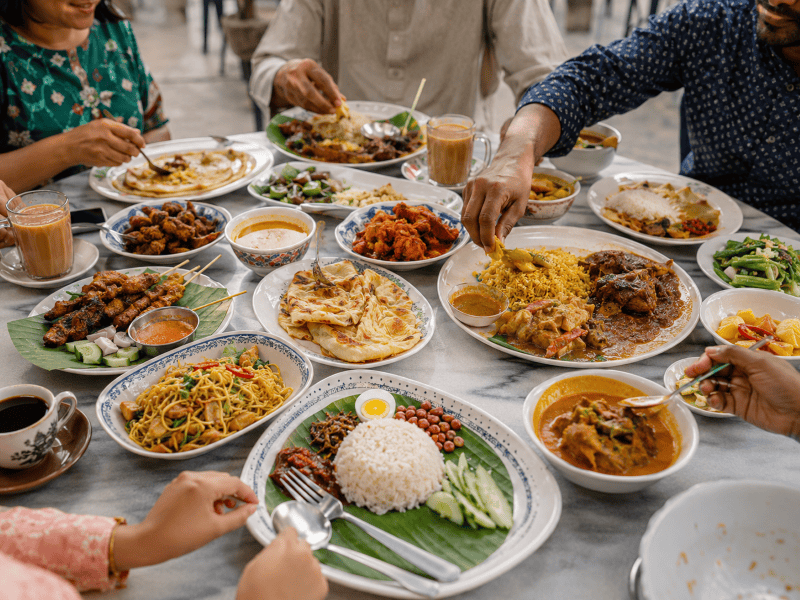
Malaysia offers a particularly vivid example. Malay, Chinese and Indian communities have each contributed to the country’s identity, with their influences visible in religion, language, festivals, family life, commercial culture and, perhaps most obviously, food.
Malay, Chinese and Indian cuisines do not simply sit alongside one another. They meet, overlap and adapt, creating an extraordinary culinary culture that reflects centuries of migration, trade and shared life. It is difficult to think of many places where such different traditions have combined to produce something so recognisably distinctive.
Food matters because it often reveals cultural history more clearly than any corporate briefing. Who eats together? What is served? How is it prepared? Which ingredients are avoided? Is hospitality formal or relaxed? Does a meal precede business, conclude it or form part of the process through which trust is established?
These questions may appear social rather than commercial, but international business is conducted between people. Relationships, hospitality and mutual confidence often determine whether a formal discussion progresses at all. The lesson is not that anyone working in Malaysia must become an instant expert in every community or tradition, but that they should resist arriving with a simplified idea of what Malaysian, Asian or international business behaviour looks like.
Many discussions about working internationally quickly become lists of customs. Do not point the soles of your feet towards somebody in Thailand. Be cautious about touching another person’s head. Understand when to bow, clasp your hands or shake hands. Be aware that the left hand may carry particular cultural or religious associations. Learn how names and titles are used and understand local attitudes towards dress, punctuality, hospitality, tipping and gift-giving.
These details can matter, sometimes more than an unfamiliar visitor realises. Even the exchange of a business card may carry considerable significance. In many East and Southeast Asian business settings, a card may be offered and received with both hands, after which the recipient pauses to read it carefully and visibly before placing it away respectfully.
To glance at the card and push it immediately into a pocket can suggest that insufficient attention has been given to the person presenting it. The card is not merely a convenient piece of contact information. It represents the individual, their position and the relationship that is being established.
Gift-giving provides another useful example. Across much of Europe, it is normal to open a gift immediately, allowing the giver to share in the recipient’s reaction. In a number of Asian cultures, however, a gift may be accepted graciously and opened later in private. That is not a sign of indifference. It can protect both parties from embarrassment if the gift is inappropriate, unexpectedly extravagant or simply not to the recipient’s taste, and an unguarded facial expression might otherwise cause the giver to lose face.
The rules and practices vary by country, generation and circumstance, but the wider lesson is consistent. The same action may communicate something quite different in another cultural setting.
Understanding these customs may help a visitor avoid an embarrassing or discourteous mistake. More importantly, making the effort demonstrates that we recognise we are entering somebody else’s environment. Yet cultural understanding cannot be reduced to etiquette alone, because the deeper questions concern how people communicate, establish trust, exercise authority and reach decisions.
Who is expected to speak first? Who can openly disagree with whom? Does silence signify consent, uncertainty, respect or resistance? Is a contract the culmination of a relationship, or the point at which the relationship begins? Is direct criticism regarded as efficient and honest, or unnecessarily confrontational? Does a friendly response indicate agreement, or merely a desire to preserve harmony? Who needs to be consulted before a decision can genuinely be made?
These are not superficial differences. They can determine whether a negotiation succeeds, whether a team feels able to speak honestly and whether a strategy designed at head office works in the market where it is supposed to be implemented.
The same principle applies closer to home. We sometimes speak of American, British, Australian or European culture as though each were uniform, when the reality is much more complicated.
The United States contains significant differences between north and south, east and west, major cities, smaller communities and individual states. The language may be shared, but attitudes towards religion, politics, hospitality, formality, service and personal interaction can vary considerably.
An American may use “sir” or “ma’am” naturally as a sign of courtesy, while an Australian may call a very senior colleague “mate” without intending the slightest disrespect. A British person may use understatement where somebody from a more direct culture expects an explicit opinion. What the British person regards as a reasonably clear criticism may sound like faint concern to an overseas colleague.
Tipping is another obvious example. In the United States, it is deeply embedded within many service interactions. Elsewhere, expectations may be lower, already included within the price or absent altogether. None of these behaviours can be understood properly by translating the words alone, because context is what gives them meaning.
There are differences within organisations too. A multinational company may establish its own corporate values, but the way those values are interpreted in London, Singapore, Sydney or New York will inevitably be influenced by local expectations. Publishing one set of values from headquarters does not automatically create one uniform global culture.
Working in international tourism gave me another useful perspective: people from different markets do not necessarily travel in the same way. Holiday entitlement, distance, air access, visa requirements, family structures, economic conditions, religion and cultural attitudes towards travel all influence behaviour.
Australians travelling to Europe have traditionally tended to stay for relatively long periods. The distance and cost of the journey encourage them to make the most of being there. American visitors may take shorter trips because holiday entitlement, working patterns and attitudes towards annual leave are often different.
Travellers from Asian markets may also display distinctive patterns. Some take relatively short and intensive European journeys, visiting several destinations within a compressed period. Visitors from the Philippines, however, may travel for longer once they have navigated the cost, distance and complexity of reaching Europe.
There can also be a religious dimension. The Philippines has a predominantly Catholic population, and for some Filipino travellers a European journey may include important churches, shrines and pilgrimage destinations alongside the more conventional touring programme. A visit might therefore connect major cities with places of particular religious significance, perhaps across several countries, creating a longer and more purposeful itinerary that is part pilgrimage and part holiday.
These are broad tendencies rather than rigid rules, and individuals never conform neatly to national profiles. Markets also change over time. Nevertheless, understanding the forces shaping travel behaviour is commercially important because it influences itinerary design, pace, accommodation, food, guiding, shopping, optional experiences, language support and the amount of free time customers expect.
A tour designed around the assumptions of one source market cannot simply be translated and sold unchanged to another. That is where cultural understanding moves from politeness to commercial performance.
Tourism occupies a particularly sensitive position because the product is often somebody else’s place, history, heritage and way of life. A tourism business is not merely moving people between hotels and attractions. It is interpreting destinations, selecting stories, introducing visitors to communities and influencing how one culture sees another.
That creates responsibilities. We should avoid reducing countries to a handful of convenient stereotypes and should understand the religious, historical and political meaning of the places being visited. We should listen to local guides, colleagues and communities rather than treating them simply as delivery partners for a product designed elsewhere.
We should also recognise that what feels like entertainment to a visitor may be heritage, faith, identity or lived experience to the host community. A religious procession is not merely a colourful spectacle. A historic site may remain connected to conflict or injustice within living memory, while a local tradition may have meanings that cannot be captured by presenting it as a quick photographic opportunity.
The guide plays an especially important role here. A good guide does more than transmit dates and facts. They interpret context, help visitors understand what they are seeing and bridge the distance between the culture of the guest and that of the host.
In tourism, cultural misunderstanding does not remain inside the meeting room. It reaches the visitor, the guide, the host community and ultimately the way a place is seen.
The World Cup and Commonwealth Games bring many of these questions into public view. The 2026 World Cup was staged across three countries with different languages, political cultures, national identities and approaches to hospitality. Glasgow’s Commonwealth Games similarly brings together athletes and visitors from a wide range of nations and territories, while seeking to celebrate both international sport and the distinctive culture and energy of the host city.
That balance matters. Successful international events should not erase the personality of the destination in pursuit of a bland, supposedly universal welcome. Nor should the host culture be presented in a way that excludes, patronises or caricatures those arriving from elsewhere.
The objective is not cultural neutrality. It is cultural confidence combined with generosity and awareness. The best hosts know who they are, but remain curious about who is arriving.
After decades of international work, I do not believe that cultural awareness means memorising the supposed characteristics of every nationality. That approach can quickly become another form of stereotyping, particularly when broad observations about a society are treated as fixed truths about the individuals within it.
Cultural frameworks can still be useful. They may alert us to possible differences in communication, hierarchy, decision-making, attitudes towards time or the way disagreement is expressed. Used well, they encourage us to look more carefully and ask better questions. Used badly, they become shortcuts that allow us to stop being curious.
The reality is that nationality and heritage are only part of what shapes a person. Family, education, profession, generation, personality, travel and individual experience all play a role. Two people from the same country may approach a business discussion very differently, while two people from very different backgrounds may discover that they share remarkably similar values and instincts.
For that reason, the most valuable international skill is not perfect cultural knowledge, which is probably impossible in any case. It is the habit of disciplined curiosity: observing before judging, asking how decisions are made locally, listening to what is said and paying attention to what is not.
It also means seeking advice from colleagues who understand the market from within, and accepting that behaviour which initially appears inefficient, indirect, overly formal or unexpectedly casual may make sense within a context we have not yet understood. Perhaps most importantly, it requires us to recognise that our own way of working is also cultural. It is not the neutral standard against which everybody else should be measured.
One of the things I came to understand more clearly the longer I worked across cultures was that, beneath the visible differences, many basic human aspirations are surprisingly familiar.
People want to feel secure. They want to care for those close to them, to be respected, to contribute, to have some influence over their lives and to believe that the future may hold something better. The way these hopes are expressed can vary enormously, but the underlying concerns are often recognisable.
I found this increasingly useful when developing strategy or working with local teams. It is much easier to understand behaviour when you look beyond the surface and ask what people are trying to protect, achieve or avoid. What may initially appear cautious, resistant, deferential or highly relationship-led can make much more sense once you understand the underlying concern.
That does not mean everyone wants the same kind of life, or that cultural differences are superficial. Cultures influence which needs take priority, how success is defined and whether the interests of the individual, family, community or wider society come first. Prosperity might mean personal advancement in one market, security for an extended family in another and the ability to fulfil obligations to a community in a third.
The same is true of autonomy and belonging. In one culture, agency may be expressed through individual choice and direct personal ambition. In another, it may come through trusted relationships, family responsibility or the standing that comes from contributing to a group.
Recognising that common humanity does not remove the need to understand cultural context. It makes that understanding more practical. We should not assume that everybody is simply like us beneath the surface, because that risks erasing genuine difference. Nor should we imagine that unfamiliar behaviour makes other people fundamentally unknowable.
The more useful question is often: what recognisable human aspiration or concern is being expressed here, and how has culture shaped the way it is communicated?
There is an important distinction between respecting cultural difference and abandoning professional standards. Working internationally does not require leaders to surrender their principles, tolerate misconduct or avoid difficult conversations. It requires them to communicate expectations in ways that can be properly understood and acted upon.
A leader can remain clear about accountability while recognising that public confrontation may be counterproductive in a particular culture. They can expect honesty while understanding that disagreement may not initially be expressed directly, and uphold equality and respect while adapting the way meetings, feedback and relationships are managed.
The objective is not to become a different person in every market. It is to develop enough awareness to remain authentically yourself without assuming that everyone else must communicate, decide and behave exactly as you do.
The world is more connected than at any previous point in my career. Technology can translate conversations almost instantly, international teams can work together without occupying the same room, and films, news, business information and cultural content from almost any country are available before we arrive.
Artificial intelligence can also help us prepare by explaining customs, translating material and highlighting possible areas of sensitivity. All of that is useful, but there is a danger in believing that access to information creates understanding.
Watching a popular television programme may provide a conversational opening. Reading local news may help us appreciate the issues occupying people’s attention. An AI-generated cultural briefing may alert us to obvious customs or mistakes to avoid. None of these can tell us with certainty how the particular person across the table thinks, how influence works inside their organisation or what remains unsaid during a meeting.
Understanding still requires time, attention, relationships, humility and a willingness to be wrong. Whether we are leading a global business, designing a tour, hosting an international sporting event or simply visiting another country, the principle is much the same.